
“Y’all heard it from bananito himself,” said the anonymous creator of Fruit Love Island on Saturday, posting an image of a Pixar-esque banana wearing Hawaiian shorts. “Bye.” Hundreds of millions had been following a cast of AI-generated fruit as they tried to find love on TikTok. The show had been running for just over a week before its creator quit the platform, citing supposed mass reports from anti-AI parties. Concerned viewers might have been right to raise the alarm. But they’re fighting a losing battle. Everything on the internet is becoming Fruit Love Island. All short-video sites are populated by AI “slop”. It’s fast-paced and melodramatic and disconcerting. Sometimes it’s ironic; sometimes it merely exists to keep the user hooked, ramping up ad revenue for the generator. Now we’re seeing it leak into war, with Iran an unexpected pioneer of the form.
The regime’s standout clip is two minutes long and goes like this: at the White House we meet Trump, Pete Hegseth, and Satan, who are made of Lego. Lego Trump peers into a Lego copy of the Epstein Files. He gets frustrated and presses a Lego button, launching a Lego rocket on a Lego school. One Lego soldier cries and picks a child’s backpack out of the rubble; another sits in a war room under a portrait of Ayatollah Ali Khamenei, who in this scenario is not made of Lego. Lego bombs fall on a military base in Cyprus; an American plane falls on a group of Reaganite minifigures. The Lego Burj Al Arab is under attack; so is Lego Tel Aviv. Lego Netanyahu runs for cover. The Lego Strait of Hormuz closes; Lego magnates cry as oil prices go up. Soldiers remove a Lego coffin from an American military helicopter. “In remembrance”, reads a black screen, “of the 168 students from Minab who were martyred by the hands of Zionist and American terrorists”.
Nobody needs to say the concept is insensitive. The innocent casualties deserve more than a parody of a children’s film. Its cheap production value makes it even worse. To many onlookers online, AI comes with an anti-sheen. Iran’s propaganda imagery is also the imagery of the modern romance scam, the Facebook clickbait reel, the corner-cutting conglomerate, and, most inconveniently of all, the White House’s X account. Trump’s social media team regularly uploads AI imagery, much of it generated with the same disconcerting bent towards children’s media. They recently inserted Trump into Animal Crossing, a low-key video game about farming, to push his agricultural policy. Last year he appeared as a light sabre-toting Jedi. And when an image of an ICE deportation went viral, his team posted a version in the childlike style of Studio Ghibli.
Trump’s alignment with AI comes quite naturally. He won over voters after positioning himself as a counter to America’s cultural elite, the same people in charge of “woke” media and entertainment. He stands for Middle America; his enemies commandeer “the failing New York Times” on one coast, and “Liberal Hollywood” on another. AI companies promise to replace them by giving anyone the tools to make some approximation of a big-budget Hollywood film. This might work for the anonymous creator of Fruit Love Island. It will not work for the world’s elder statesmen.

AI is a flattening technology. It has given two very different world powers access to the same taste, or lack of it, and lifetime rights over the same plundered library of imagery. Whatever comes out of it loses its cultural character. For one strange week last year, the hyper-Japanese Hayao Miyazaki belonged to everyone; the Studio Ghibli style simply melted into an existing wasteland of aesthetic schema, with any local association supplanted by irony. In this case the propaganda images come from children’s films, and the children’s films have been funded by Hollywood capital. The wide-eyed characters in the AI clips originally hail from Pixar Studios; after being funnelled through Sora or Stable Diffusion they look the same and emote in the same melodramatic manner, no matter whose territory you are standing on. Iran is agitating for its own interests, but the Lego bombings and plane crashes in its new bit of propaganda are simply an average of every franchise film produced in America. You could make a case for AI as an exercise in soft power; American tech has forced American cultural forms to the forefront.
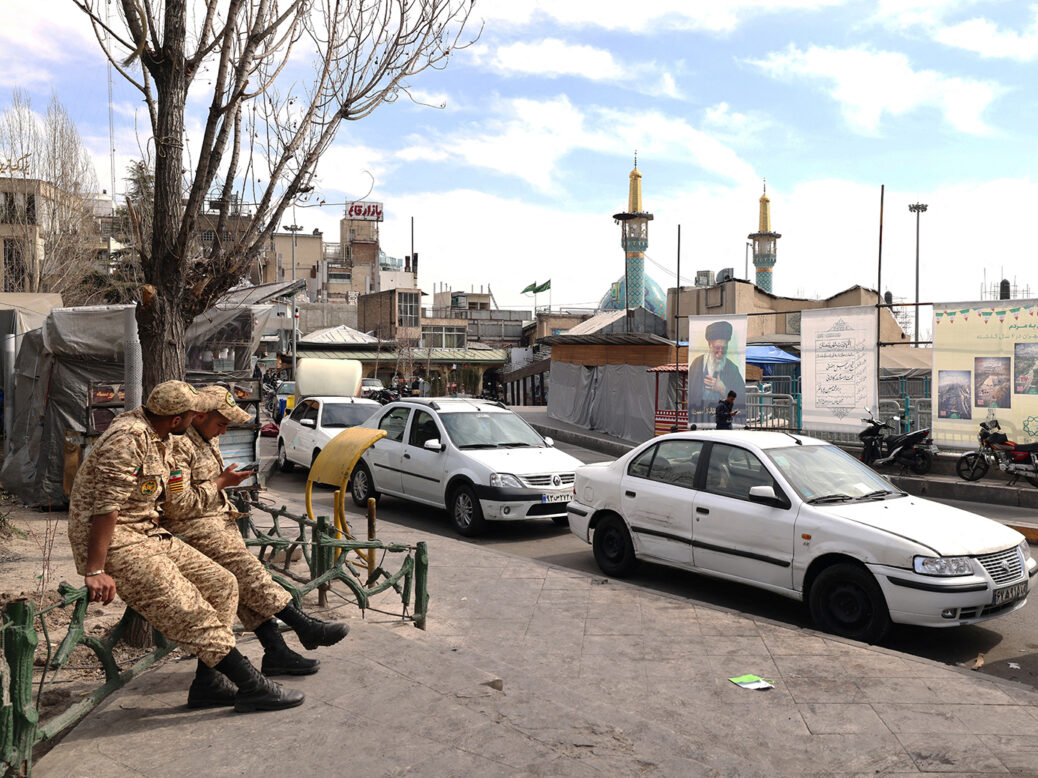
But propaganda wars, like physical wars, are about state capacity, and in this case the tools defeat themselves. Our Cold War-era tensions are almost all still present. But the tensions once found form as distinct visual schema. The various “looks” of Soviet propaganda are still legible to us today. Mao’s ideological war against American capitalism also meant a deliberate rejection of a glossy, cosmopolitan aesthetic that had taken root in urban China’s visual culture four decades earlier. The resultant films and propaganda posters articulated a specifically Maoist vision of a better world, one full of picturesque sunrises and heavily-muscled farmers. Modern Iran remains in the shadow of its 1979 revolution, which spawned a similar legacy of utopian hand-painted propaganda. Yet nothing in this current war is distinguishable from anything else. It’s spurred on by ideological and religious forces, but none have found a voice. The leaders of America and Iran know how they want the future to look, but their imaginations have melted together and the result is incoherent. The democratisation of propaganda has backfired; the results are nihilistic. Each side has the chance to win an online war. Neither can articulate why it is fighting.
[Further reading: Hollywood loves Russians again]
Content from our partners


Related

Join the debate
Subscribe here to comment